
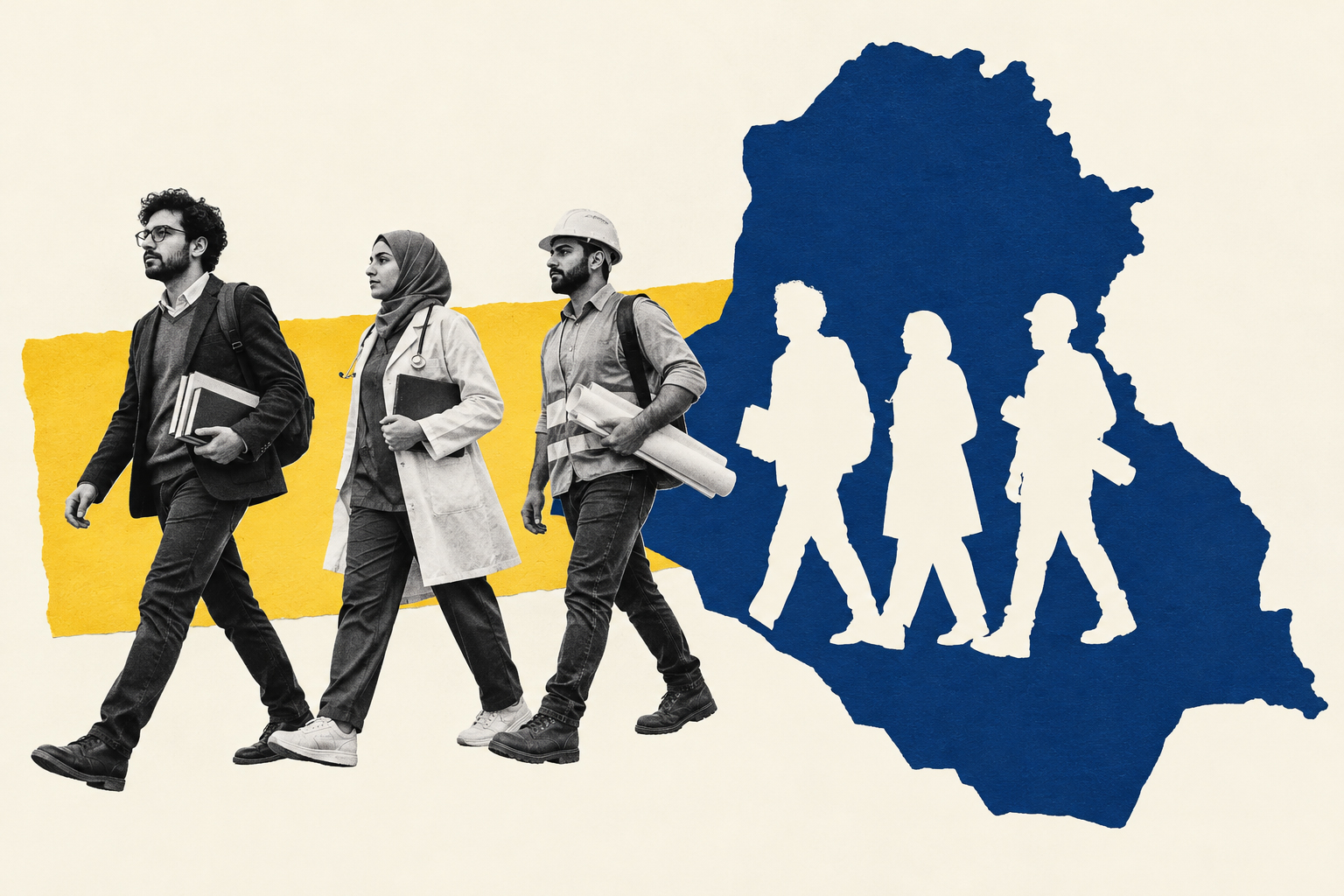




The stability of states is not secured through repression or tyranny, but through their ability to achieve justice and protect the rights of their citizens under the umbrella of “constitutional institutions,” rather than through the power of individuals who dominate those institutions. Yet political reality in most Third World countries, including Iraq, often conflates two concepts that differ fundamentally in meaning: the first is the “strong state,” and the second is the “harsh state.”
This is, in fact, the foundation upon which constitutions emerged and the philosophy underlying their existence: they establish clear limits to prevent despotism, subject the exercise of power to law rather than individual whims, and guarantee fundamental rights such as freedom of expression, equality, and the right to a fair trial. Constitutions also define the identity of the state and reflect society’s values in terms of religion, culture, and political and intellectual orientations.
The concept of a strong state refers to a state that derives its strength and capacity from the rule of law, the effectiveness of its institutions, popular legitimacy sustained by citizens’ trust, and an independent judiciary. Moreover, it is a state capable of enforcing its decisions and protecting its borders and internal security without resorting to excessive coercion, because citizens regard its institutions as a refuge that guarantees their fundamental rights and freedoms.
A harsh state, by contrast, is one whose authorities are unable to secure popular legitimacy based on the consent and acceptance of the people and fail to achieve development. As a result, it relies entirely on the security apparatus to assert its authority, marginalizes the law, and subordinates institutions to individual or elite authority. Society is then governed through intimidation and the silencing of dissent rather than participation and citizenship.
One consequence is the disappearance of the institutional state in favor of a harsh regime. The damage does not stop at restrictions on constitutional freedoms; it extends to the foundations upon which the survival of society and the state depends. Other serious and harmful consequences also emerge, including:
The weakening of security, and at times its complete absence, with direct consequences for the economy and investment. Domestic and foreign capital and businesses are driven away by instability, while sustainable development is replaced by an economy of patronage and corruption that operates without accountability or oversight.
The illusion of security created by repression may deceive those who hold power, but it merely conceals accumulated tensions: a fragile stability built on fear. When institutional channels for expression and accountability are blocked, those tensions may at any moment turn into popular anger reflecting long-suppressed grievances, threatening a sudden eruption or disintegration when the country encounters its first crisis.
The harshness of the regime drives away talented minds and qualified professionals of integrity. The state becomes an environment that repels skilled individuals, academics, and scientists, entrenching intellectual stagnation and depriving the country of opportunities for scientific and technological advancement.
National loyalty erodes when the state is reduced to individuals or influential groups. This weakens citizens’ allegiance to public constitutional institutions and necessarily drives them to seek security through narrower loyalties—tribal, regional, factional, or partisan.
Among the most important consequences of such despotism, monopolization of power, and harsh governance is the intervention of major international powers in the management of the country’s crises. Foreign powers and interests often prefer dealing with the “authority of individuals” rather than the “authority of institutions” in developing countries or states with fragile political systems.
One reason for this preference is the speed and flexibility of individual decision-making, which makes it easier to conclude deals and push through major security and economic agreements with an individual ruler or a narrow elite, away from parliamentary and public oversight.
This also perpetuates dependency by linking an authoritarian ruler’s continued hold on power to external support that protects him from domestic pressure. This leads many such rulers to make concessions on matters of sovereignty in favor of foreign powers—concessions that might not occur if the political system were based on constitutional state institutions rather than on the rule of a harsh, authoritarian leader who behaves arrogantly toward his own people while displaying subservience toward foreign powers.
This is precisely what such external powers seek: the appearance of calm imposed by a firm security grip, which they prefer over democratic and institutional transformation because such a transformation could produce independent leaders who reorder national priorities.
In conclusion, a state does not become strong by imposing harsher penalties on individuals or by expanding and multiplying its security agencies. It becomes strong through the strength of its institutions, the justice of its laws, and the firm conviction among its citizens that the law applies to everyone without exception.
Entrenching the authority of individuals at the expense of institutional authority—whether for domestic reasons or encouraged by international interests—does nothing more than postpone crises and internal tensions. Institutions founded on an independent judiciary and just legislation are the only means capable of ensuring the continuity of the state and protecting its national security and national independence.


Comments